• This site contains eBay affiliate links for which Sea-Doo Forum may be compensated.

2000 240 M2 will not start

Status
Not open for further replies.

Shortrun

Well-Known Member
This is a new install of the power head after rebuild (by us)
Engine cranks fine. If we put fuel into the cylinders the engine starts and runs until the fuel we put in is used up. A couple seconds.
Measured the high pressure fuel at the schrader valve, a little over 36 psi by out gauge.
So the injectors are not injecting.
Any thoughts on where to look first?
 
This is a new install of the power head after rebuild (by us)
Engine cranks fine. If we put fuel into the cylinders the engine starts and runs until the fuel we put in is used up. A couple seconds.
Measured the high pressure fuel at the schrader valve, a little over 36 psi by out gauge.
So the injectors are not injecting.
Any thoughts on where to look first?

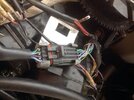
Starboard side of engine, down low. There is a connector for the injectors. About 5/8 inch diameter, 4 wires. Check for clean connections. Keyed for reassembly. Inside the air handler, were all the injector connectors installed properly? Have you checked all the ground wires? There are at least 3. A tight screw does not guarantee a good connection.
 
Tim. I will definately check those ground wires.

I have been reading about fuel injectors, they are new to me. But this is the connector I was thinking about going to first, now i will.
I don't now much about fuel injectors but know lots about electronics (spent my entire working life diagnosing circuitry) So I will check the connections. Then move on and get the oscilloscope out and probe in there to see if the EFI is driving the injectors.

In my reading I see that when a engine is at maximum RPM the injectors are almost open (squirting fuel) for the entire time the intake valve is open (4 stroke) so on a 2 stroke they could be open about 180 degrees maybe, I am not sure.
I also see that on this Gen 1 Mercury there does not apear to be a trigger ( edit - this is wrong there are 3 triger wires from the Control Module to the ECU ) for deciding when the injection happens, actually there would need to be 3 different triggers. I could easily be missing something, I'm trying to read the schematics but none of the the wires are labeled. So lots of guessing.

With all that, I was considering manually triggering the injectors. Just a hand held momentary contact switch. Maybe just trigger a set of injectors so it is only running on 2 cylinders. To prove the injectors and reed valves are all work properly. What do you think?
edit - after some reading I have decided this is a bad idea. It may work and it may not, driving the injectors can be a complicated process, to keep the amps low/safe once the injector is opened.
 
Last edited:
Update. I have been studying the wiring diagram for the motor and boat (dash panel) and making some measurements.
-We did the fuel pressure leak down test. 36 PSI with pump running. Shut pump off and after 45 seconds the pressure had dropped to 30 PSI. I expect this is good.
-Measured the Air Temperature Sensor with an ohm meter. At 70 degrees F it should be about 9 K ohms. Mine is 18 K ohms, which would be good if the temperature is 32 degrees F, so it is failed. But not causing the injectors to not inject. This false cold temperature would cause more fuel to be injected.
-Measured the Head Temperature sensor. At 70 degrees F it should be 1.3 K ohms and mine is 1.3 K ohms. So it looks good. I also checked the reading for the sensor senting to the dash panel temperature meter and it is 1.3 K ohms. So it is good too, I think.
-Throttle position sensor not tested yet.
-Injector information, there are 6 injectors. 3 sets of 2 injectors connected in parallel. They measure1.2 ohm, so each injector is 2.4 ohms. I believe that makes them low impeadance injectors. And seem to test good with the ohm meter.
-Attached the oscilloscope to each of the 3 injector wires. I watched others on Youtube do this and with my past experience I had expectation of what to see. I did not see that. But did see some activity, like the EFI computer is trying to do its job. To me it looked like there is lack of a good ground in the EFI computer module. Something appears wrong here.
-I did check all the ground wire connections to the engine. More work is required.
-I want to remove the EFI computer

-I did go through much of the other circuits, like the key and the kill switch and the Head Temperature Switch (on the starboard head) These all seem to effect the spark only. Not the fuel injection.

-While we had the Intake Air Temperature Sensor out we used a curved tip syringe and squired fuel/oil mix in while cranking the engine. It started and kept running as long as we kept squiring fuel in.
 
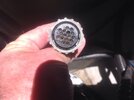
Picture of the multi-pin connector, engine to EFI computer.
Green copper corrosion can be seen on some pins.
I cannot see where the wire is crimped inside, there may be a tool to get these pins (sockets) out but I don't have one.
 

Attachments

  • EFI 240 connector.jpg
    EFI 240 connector.jpg
    159.4 KB · Views: 33
Picture of the multi-pin connector, engine to EFI computer.
Green copper corrosion can be seen on some pins.
I cannot see where the wire is crimped inside, there may be a tool to get these pins (sockets) out but I don't have one.

If you remove the ecu, don’t try to open it. All sealed and potted inside. Seldom a failure point. Electronics are pretty robust.

Do you have a ground wire between ecu and block?
 
Thanks Tim. You kind of burst my bubble for a repair of the ecu. I hate potted circuits, so hard to troubleshoot. But as you say, quite reliable.

Yes the ground wire between the ecu and engine chassis is there and ohms good. I will clean it up to be sure.
I think i will focus on that multipin connector in the picture above. I have ordered a tool that will hopefully extract the pins.
Plus start measuring things like how much amps the ecu is drawing on the +12 volts and other basics.
 
Update
I measured the ohms for the wires that run from the injectors to the ECU. All are good, close to zero ohms.

The throttle position sensor has 3 wires to it. The orange is 6.3 volts. The TAN/black is 1.6 volts. The Lite Blue is 1.8 volts (at idle throttle) and 3.5 volts (wide open throttle) I am guessing this is good

The ECU amps (red wire, multi pin connector 6 ) is 85 mA when the key is ON, zero when the key is off.
and the purple wire multi pin conn 7 (switched +12 from the key) is 10 mA key On, zero when key is off.
[so the ECU is drawing current, i guess that is good] [is was expected higher current ???]

The Fuel Pump and Fuel Primer Relay are controlled by the ECU box. The Black/red wire goes to pin 2 on the multipin connector. When the key is turned on the ECU grounds this wire for about 10 seconds. About 5 amps is flowing thru the Black/red wire into the ECU and can also be seen on the Black wire, pin 18 on the multipin connector going back to ground. This is the clicking sound (Fuel Primer) and hum (Fuel Pump) you hear when the key is turned on. I hope the ECU computer is controlling this but it may be a separate timer IC.

Oh man, this is not looking good. All thats left are 3 wires that come the Control module, spark timing I suspect. I will get the oscilloscope out again and check these.
Also the ECU is 240 EFI ECU 824003A31

edit - all 3 wires out of the Control module have a voltage pulse about 3 volts amplitude and occurring what looks like one pulse per revolution. Exactly what I would expect.
So darn, there is nothing left but a failed ECU.

 
Last edited:
Update
I measured the ohms for the wires that run from the injectors to the ECU. All are good, close to zero ohms.

The throttle position sensor has 3 wires to it. The orange is 6.3 volts. The TAN/black is 1.6 volts. The Lite Blue is 1.8 volts (at idle throttle) and 3.5 volts (wide open throttle) I am guessing this is good

The ECU amps (red wire, multi pin connector 6 ) is 85 mA when the key is ON, zero when the key is off.
and the purple wire multi pin conn 7 (switched +12 from the key) is 10 mA key On, zero when key is off.
[so the ECU is drawing current, i guess that is good] [is was expected higher current ???]

The Fuel Pump and Fuel Primer Relay are controlled by the ECU box. The Black/red wire goes to pin 2 on the multipin connector. When the key is turned on the ECU grounds this wire for about 10 seconds. About 5 amps is flowing thru the Black/red wire into the ECU and can also be seen on the Black wire, pin 18 on the multipin connector going back to ground. This is the clicking sound (Fuel Primer) and hum (Fuel Pump) you hear when the key is turned on. I hope the ECU computer is controlling this but it may be a separate timer IC.

Oh man, this is not looking good. All thats left are 3 wires that come the Control module, spark timing I suspect. I will get the oscilloscope out again and check these.
Also the ECU is 240 EFI ECU 824003A31

edit - all 3 wires out of the Control module have a voltage pulse about 3 volts amplitude and occurring what looks like one pulse per revolution. Exactly what I would expect.
So darn, there is nothing left but a failed ECU.


Wow! Way deeper than anyone has ever gone before.

Have you checked all the grounds? Including the wires for the two black boxes on top of port cylinder?

Good clean connections to ecu are required. No green pins.

Did you scope the injectors? The is a test harness avail that uses leds to show voltage at the injector. I think scope would show more.

The lift pump (thump thump) is on a timer in the ecu. I think the vst pump is on a timer too. I don’t remember the time.

You could also scope the timing trigger.

The temp sender on receipt are known as delicate and break easily.

Tps~ disconnect and check ohms. Looking for smooth transition.
 
Last edited:
I did scope the injectors and there was no waveform on any of them, really nothing just noise.
I did scope the trigger pulses, all 3 looked good to me. (I have never tested a working engine)
I replaced my temperature sensor with a 8 K ohm resistor. ( 70 degree F value)

Tim, you said "don't open the ECU" it is potted. Did you learn this from experience? Maybe you have an idea of how to open it, without damage. Removing the torques screws does not work.
Thanks for all the words of advice.
 
I did scope the injectors and there was no waveform on any of them, really nothing just noise.
I did scope the trigger pulses, all 3 looked good to me. (I have never tested a working engine)
I replaced my temperature sensor with a 8 K ohm resistor. ( 70 degree F value)

Tim, you said "don't open the ECU" it is potted. Did you learn this from experience? Maybe you have an idea of how to open it, without damage. Removing the torques screws does not work.
Thanks for all the words of advice.

Experience is a brutal teacher. Don't open it. Even if you get the cover off, it is full of potting resin. You can get it tested by a shop experienced with them. Brocato.com (sp) is the only company that comes to mind. They can repair/replace. You may have to BOAT- Break Out Another Thousand.

How did you scope the injectors? Harness is suspect before the ecu.
 
For the injectors I tested them at the 4 pin injector connector. I also ohm tested the 4 wires across the multipin connector and all were good.

I did see Brocato.com in my searching. Not sure that is an option. I may contact them, asking questions is usually free. Like how many Boats (Break Out Another Thousand.) will it take.
 
For the injectors I tested them at the 4 pin injector connector. I also ohm tested the 4 wires across the multipin connector and all were good.

I did see Brocato.com in my searching. Not sure that is an option. I may contact them, asking questions is usually free. Like how many Boats (Break Out Another Thousand.) will it take.

A year ago I took my injectors out and had them serviced on a flow bench at a specialty shop. 2 leaked, 1 stuck shut, 3 had so-so spray pattern. They were serviced and flow-matched within 4% of each other. Since your injectors are over 20 years old, is it possible they are all clogged or stuck shut? Could you have an "air lock" in the plumbing for the injectors? Never had it myself, just a thought. There is a strainer on top of each injector. Could they be clogged?

Don't forget- those "test squirts" of gas should be gas/oil at 50:1 or maybe 40:1 for break-in.
 
Update
Today we exposed the the intake manifold, so we can see the injectors.
Used a new 9 volt battery (like what is used in my multimeter) Verified all 6 injectors spray fuel, so are good.
So, true this does not verify flow rate or spray pattern. But it proves the injectors would spray fuel if the ECU was telling them to.

I have made contact with
info@brucatopower.com
They said if I ship the ECU down they will test it for 75$US.

I asked, how long to test. Plus the cost and delivery time of a new replacement ECU. No response yet but it may take some time to work out. It is likely there (very) busy time of year.

Now we have to go back and repeat all the tests we have done to be sure we get the same results.
 
Last edited:
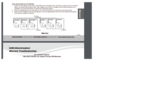
I found an interesting test document that talks about many CDI
It has a 6cyl merc
It says check the purple wire for more than +10 volts, I am good here.
Then there are 3 wires Green, Green/White and Green/Red, and they should have about +8 volts. I have no volts on these wires. Now I think they are check with a multimeter and I am using an oscilloscope.
(i said above in this thread that i seen voltage spikes on these 3 wires but they were no 8 volts so may have been noise)

https://www.cdielectronics.com/wp-content/uploads/2016/05/Tech-Guide-Digital.pdf
page 116
 

Attachments

  • mercury cdi testing.png
    mercury cdi testing.png
    211.1 KB · Views: 24
Last edited:
Is there anyone with a similar engine to mine willing to measure the voltage of the CDI output?
Simple multimeter test.

3 wires Green, Green/White and Green/Red.
Key on, engine not running.
Thanks.
 

Attachments

  • merc v6 CDI output.jpg
    merc v6 CDI output.jpg
    214.7 KB · Views: 26
I get to answer my own question about the 3 wires (Green, Green/White and Green/Red.) out of the Control module. They have 0.0 volts when the key is on, motor not running.

While working around the control module we found a bad wire connection. Once repaired the engine starts and idled good (only for a few seconds).

So very happy to report success.
Really happy the problem was not with the ECU, it is brutally expensive.

Thanks for all the help.
 
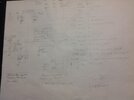
Attached is the wiring diagram i made to help in trouble shooting.
Just FYI, no promisis that it is totally accurate.
 

Attachments

  • IMG_0843.jpg
    IMG_0843.jpg
    171.2 KB · Views: 25
I get to answer my own question about the 3 wires (Green, Green/White and Green/Red.) out of the Control module. They have 0.0 volts when the key is on, motor not running.

While working around the control module we found a bad wire connection. Once repaired the engine starts and idled good (only for a few seconds).

So very happy to report success.
Really happy the problem was not with the ECU, it is brutally expensive.

Thanks for all the help.

Glad you found the issue. At least you did not have to BOAT.
 
Status
Not open for further replies.
Back
Top