


• This site contains eBay affiliate links for which Sea-Doo Forum may be compensated.

Considering installing sacrificial anode within engine.

AquaEye

Premium Member
Premium Member
As title says.
Worked on a few Yami's that had them within engine, most were dusted, replaced. Installed/replaced a few on Kawi's @ pump area, stand alone & not as a washer that secures components as some owners did.:oops:
My family & I religiously flush after every ride with salt away. The lake that we go 70% of the time to is considered to have comparably high salinity but still in the "brackish" column. That lake has a high KIA record.
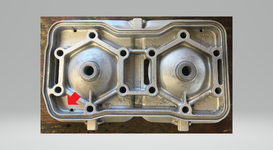
As the pics will testify to, The previous owner & his teenage sons neglected to flush &/or sat for years still "wet". Mind you, this engine only has 40.3 hrs
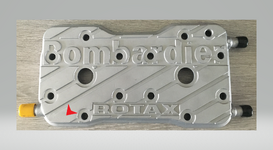
So, considering installing an aluminum pencil anode so as to arrest damage done & as a preventive measure. The arrows denote possible placement. Notice the anode would be placed off center & above metered drain.
Has anyone done or seen this & did it have detrimental effects? Positive?
1.pngscreenshot.png
 
As title says.
Worked on a few Yami's that had them within engine, most were dusted, replaced. Installed/replaced a few on Kawi's @ pump area, stand alone & not as a washer that secures components as some owners did.:oops:
My family & I religiously flush after every ride with salt away. The lake that we go 70% of the time to is considered to have comparably high salinity but still in the "brackish" column. That lake has a high KIA record.
As the pics will testify to, The previous owner & his teenage sons neglected to flush &/or sat for years still "wet". Mind you, this engine only has 40.3 hrs
So, considering installing an aluminum pencil anode so as to arrest damage done & as a preventive measure. The arrows denote possible placement. Notice the anode would be placed off center & above metered drain.
Has anyone done or seen this & did it have detrimental effects? Positive?
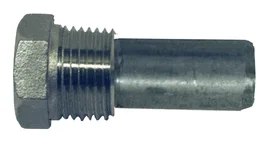
Narrowed down the search to this particular anode. I am skeptical of the 1/4" npt, large footprint. Would prefer a 1/8"npt aluminum anode but that search is running out of steam, 1/4npt x18" might be the only aluminum pencil anode available.
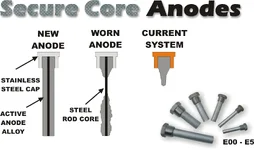
Anyway, this brand of aluminum pencil anode have a steel core so as to prevent the "wasted end" from breaking off blocking waterway(s) & considering its location just above the metered drain hole, that's a plus. The length, as told by the engineer @ PMP, can be cut ( in moderation) w/o compromising effectiveness.
Have 3 cylinder head covers along with fresh seals so one of them is going to be the "Guinea pig".
If I decide to go the full measure, I'll take some before & after pics of anode @10 hours which will probably be mid seasonCE0B_1024x1024@2x.webpSecurecore_Graphic_118074dd-9522-4cf6-8fc3-b0fba835586b_1024x1024@2x.webp
 
Look at the galvanic chart. Depending on the engine and anode aluminum alloys involved, the engine may up protecting the anode. Zinc or magnesium are what you really want.
 
Look at the galvanic chart. Depending on the engine and anode aluminum alloys involved, the engine may up protecting the anode. Zinc or magnesium are what you really want.
I think I'll stick with the aluminum. The lake I tread on 70% of the time is bi-polar when it comes to salinity levels. For instance @ the Red River arm salinity is around 1.6/1.9 @ nominal flow. A good "washout" flow can put it 2.7ish. At the Washita arm, .02/.04ish but during "washout",1.3ish. The Red River picks up salt from an ancient sea bed. That & besides I flush with salt away religiously.
I didn't know the Yami anode material when replacing engine anode with the OEM part, customers supplied that. The "extra" anodes I installed on Kawi/Yami inside the ride plate area, also aluminum, 17/8" -2" round tabs, easy install. So far, no complaints & there're doing their job.
Zinc? Not that salty & besides it compliments metal hulls better but they do last awhile, comparatively.
Magnesium? Those "other lakes" I visit (30%ish) are fresh water in Arkansas. Really not enough time there to be concerned.
I'm still on the fence with this install. There's one or two concerns I have. The anodes I've changed out have always been dissolved away, Ok but do the anodes ever break apart creating chunks to be circulated in the cooling circuit? I might consider changing install location putting anode right in the middle.
Second concern is the rather large footprint of the 1/4" npt. Cant seem to find a pencil anode of any material with a 1/8 npt.
 
You made me read and think. It has been 48 years since my corrosion class. When you said aluminum I was thinking of aluminum alloys we use for parts. Aluminum for anodes are a different animal.

SeaDoos drain off the lowest point of the exhaust manifold when not running. Doesn't the volume on top of the head also drain when not running? I don't remember it being full of water when I have taken off the head on my 717. So an anode on the top of the engine would be relatively dry when not running which is most of the time. Corrosion takes time. Galvanic corrosion also takes an electrolyte between the anode and what it is protecting, like this chart shows. Sure leftover drops and humidity in the area will give it a little electrolyte, but not like if it were submerged. A much better place to put an anode would be at the bottom of the water jackets in the cylinders is what I think.
 
You made me read and think. It has been 48 years since my corrosion class. When you said aluminum I was thinking of aluminum alloys we use for parts. Aluminum for anodes are a different animal.

SeaDoos drain off the lowest point of the exhaust manifold when not running. Doesn't the volume on top of the head also drain when not running? I don't remember it being full of water when I have taken off the head on my 717. So an anode on the top of the engine would be relatively dry when not running which is most of the time. Corrosion takes time. Galvanic corrosion also takes an electrolyte between the anode and what it is protecting, like this chart shows. Sure leftover drops and humidity in the area will give it a little electrolyte, but not like if it were submerged. A much better place to put an anode would be at the bottom of the water jackets in the cylinders is what I think.
Thanks for that extra info. The more I think about this application the more I lean towards doing w/o. Me & mine flush with salt away every time & evacuate as much water as possible(Kawi/Yami)@ the end of the season & that alone, prevents. Moot since the 787 drains by design. As far as the circuit downstream of the exhaust manifold, the marine antifreeze should suffice.
What we have here is probably me over reacting to the erosion/corrosion (40.3hrs,no salt water) already present @ time of purchase.
Or not...
 
Last edited:
Back
Top